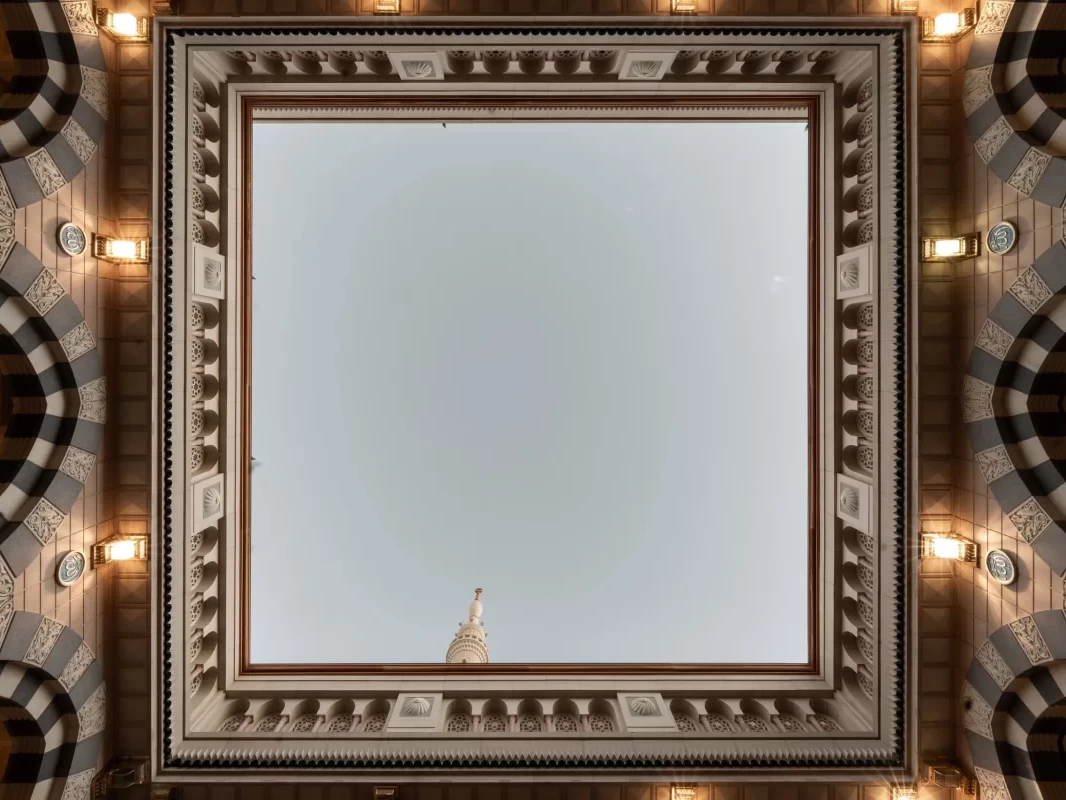


Architecture photography transitions from mere documentation to an art form rich in meaning. A photographer explores how modern towers blend with ancient traditions, capturing images that convey a deeper cultural narrative. Likewise, an interior photographer uncovers unseen dimensions where every shot reveals pieces of thoughtful design.
Here, we explore twelve techniques that change how architecture is photographed and experienced.
1. Rule of Thirds
Picture splitting the frame into nine equal-sized sections. The points where these lines intersect serve as key landmarks to highlight important architectural features. This setup brings a balanced pull to the image and guides the eye naturally across it. By doing this, you can avoid boring, centered compositions and instead give the photo a quiet, serene energy. It’s great for cityscape architecture photography. You could line up a tall minaret along one of the vertical lines, leaving room for the rest of the skyline to stretch out. This creates balance. The viewer pauses and takes time to look around.
2. Centered Composition and Symmetry
In scenes where buildings seem to reflect each other, such as grand facades or pools acting as mirrors, placing them in the center creates a powerful balance. This draws you in, turning the structure’s natural order into a striking centerpiece that grabs your focus. If you center the arched entrance of a Dubai mosque, the repeated designs can heighten a sense of peace. Stillness takes over, but shift it a little to add some curiosity.
3. Create Depth with Foreground Interest
Architecture photographers in Dubai add details like fancy railings or patterned pavements in the foreground to pull the viewer’s gaze deeper into the scene. These layers guide the eye through the architecture and make it feel like you could walk right into the picture. Depth encourages curiosity. In indoor photography, placing a vase in the front can highlight how expansive the room looks. Layers bring the scene to life.
4. Frame Within the Frame
Using doorways, arches, or hanging branches as natural frames gives the main structure a sense of enclosure. This adds depth and mystery, turning a simple architecture photography into a window that unveils hidden architectural details, almost like looking through a keyhole into the past. Framing guides focus. Photograph a Dubai skyscraper through the window of an old fort, like history shaping modernity.
5. Leading Lines
Roads, stairways, and extended shadows cut across the scene like unseen pathways. These elements draw the eye towards the building’s top or center. This gives the image a clear sense of movement and flow that reflects the design’s planned structure. In Dubai, highways meet and point to a towering skyscraper.
6. Diagonals and Triangles
Diagonal lines from roof edges or hinted triangular shapes bring a lively sense of imbalance. They push back against the stiff balance of vertical and horizontal lines. This creates energy and tension, almost as if the building itself holds a hidden force ready to burst. Snap a photo of a bridge where its beams form triangles; the sharp angles create excitement. It feels dramatic. It makes you wonder about the structure’s strength.
7. Patterns and Textures
Repeated patterns like bricks, latticework, or windows form a rhythmic flow across surfaces. These textures play with light and shadow, bringing out the building’s raw physical essence and inviting a closer look. Patterns seem to pull you in. An architecture photographer Dubai might capture the tiled floors of a villa to showcase this effect.
8. Fill the Frame
Zooming in close and cutting out any unnecessary surroundings packs the shot with the core elements of the design. This forces you to focus on the fine details, leaving no room to look away. Fill the image with an intricate cornice; let details take over. The result feels intense, almost overwhelming.
9. Use Empty Space
Wide open skies or plain walls around a single building highlight minimalism. The emptiness brings attention to the structure, giving it room to stand out and let its importance shine in simple, thoughtful stillness. Space says a lot on its own. Take a lone pavilion in the desert. The emptiness makes the shape stand out more.
10. Take Photos from Low Angles
In architecture photography, dropping the camera low and pointing it upward makes things look taller and more grand. This changes how we see them and makes them feel powerful, as lines seem to stretch toward the sky. Regular buildings can look like massive giants taking over the whole view. Lower angles give strength to the image. In Dubai, for example, low-angle shots make the towers seem to reach higher and take over the skyline. The sense of size changes.
11. Shoot from Above
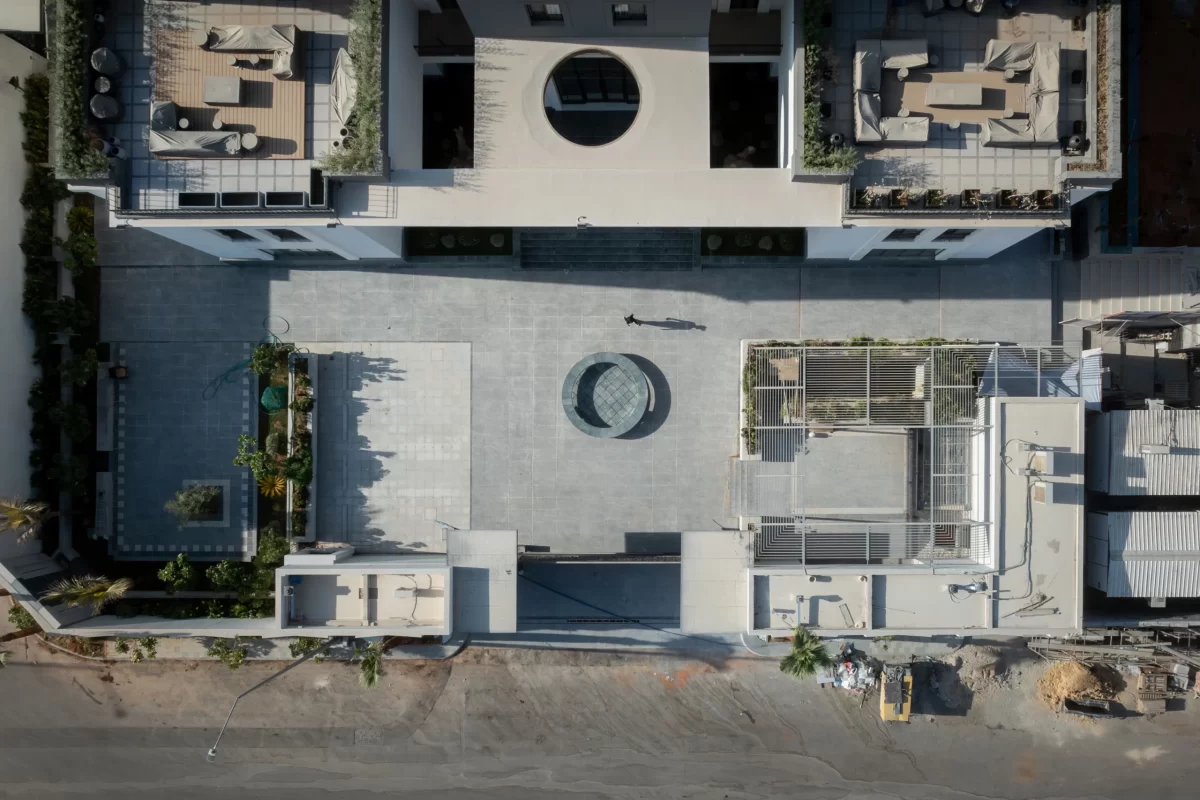
( Quartz Architects Villa by MassHouse Studio )
Looking down from high places makes the landscape feel like a living map. You can spot patterns in city layouts and see how buildings and streets fit together, forming a visual dance of shapes and movement. Viewing from above gives clarity. Drone shots of grouped buildings highlight their connections to one another. From above, you notice the bigger picture. Hidden designs and rhythms come into focus.
12. Add Layers to the Frame
Arranging foreground, middle, and background elements, like fences, mid-rise buildings, or far-off spires, creates depth in a story. Each part adds meaning and layers reflecting the stacked nature of architecture itself. Adding layers makes visuals richer. In a lively marketplace, placing rows of stalls in front of a mosque draws attention to the scene.
Putting It All Together
This guide lays out a dozen elegant methods to lift architectural photography into art. And once the basics take hold, a skilled architectural photographer Dubai, trained or otherwise, can push boundaries, merging instincts with the grand scale of structures. The subtle finesse that a photographer brings to light, color, and texture blends beautifully when photographing soaring façades or grand lobbies.
When a photographer aims a lens at geometry drenched in golden hour, every line can express emotions. And when an interior photographer captures the hush of a tucked-away reading nook, the same could be styled as architecture photography, giving architecture humanity and vibrance.
Related Posts

CDA 2026: Shoayb Khattab Wins Best Project Photography
Paris, 17th of January 2026 – Shoayb Khattab has been awarded Best Project…

Shoayb Khattab Nominated for CDA 2026 Best Photography
Shoayb Khattab has been shortlisted for the Créateurs Design Awards (CDA) for a…
Shaping Light: Workshop with Shoayb Khattab and Xposure
Shoayb Khattab, in collaboration with Xposure International Photography…